
My father taught me how to drive. I remember those very early morning sessions where we traveled through empty streets to practice starting, shifting gears, and braking. I repeated that same routine with my daughter, and I remember passing along the exact same instructions for the ultimate driving test: parallel parking.
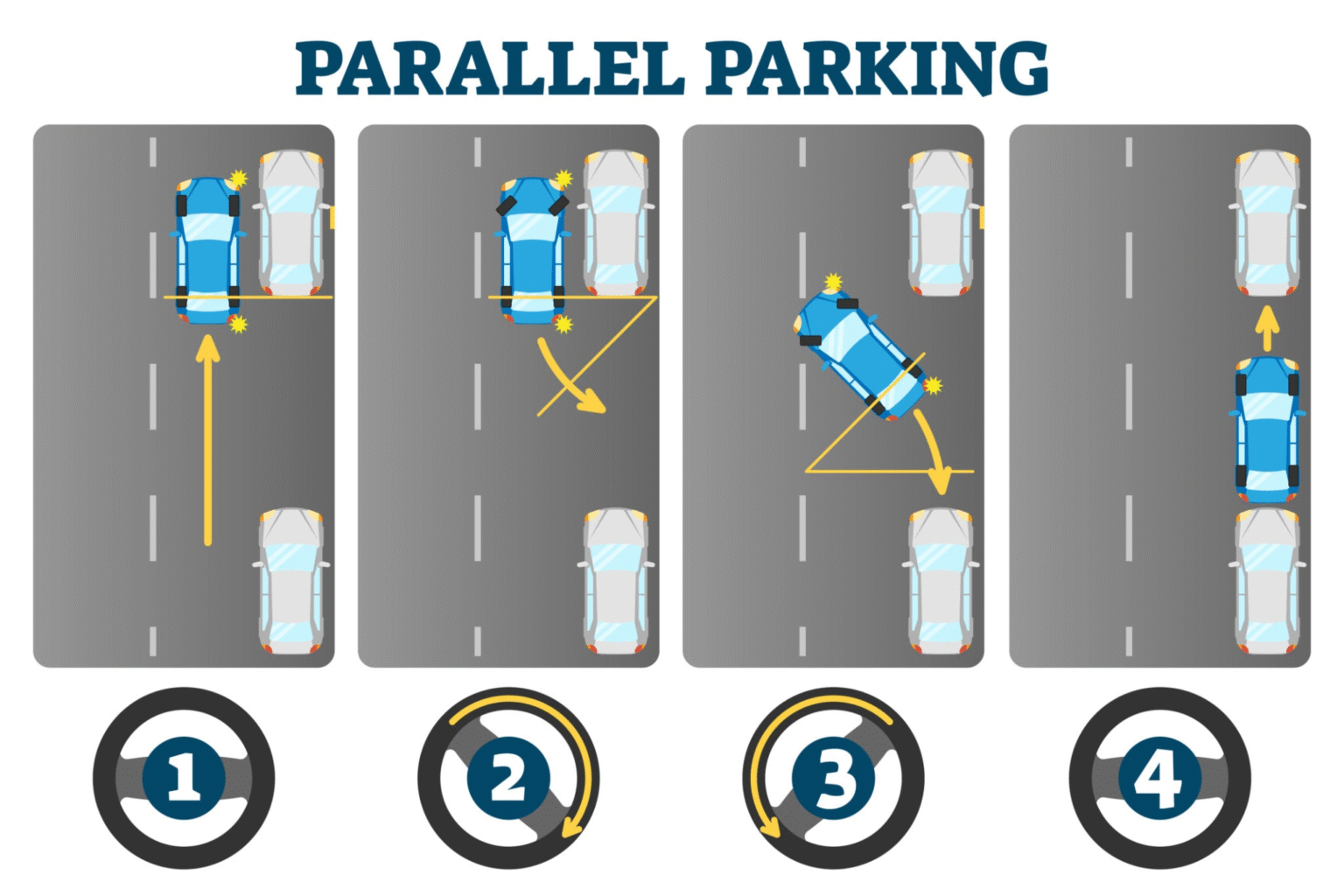
“You position yourself very close to the car ahead so that your rear wheel is aligned with its rear bumper, you turn the wheel fully to the right and reverse; once you’ve cleared the back end, you turn the wheel fully to the left, back in, and adjust.”
Or something like that.
Instruction expressed in words is exceedingly complex to explain, and this skill is only learned on the ground—feeling distances, capturing the moment with all your senses, focusing on the action, and repeating it to perfection.
In about five years (if I am still on this side of the universe), I would love to repeat the scene with my granddaughter. Let go of the reins, hold my breath, and let her perform the maneuver on her own. It will be a ritual of handing over the torch from one generation to another, rich in value and meaning.
Readers will surely have similar memories, and earning a driver’s license carries a clear connotation of permission and achievement. We can think of the world opening up in an initiation rite that authorizes us to enter adulthood. Parents, and society, are telling us: «We are handing you this one-and-a-half-ton machine and trusting you with your friends’ lives and your own. We are counting on your good judgment and maturity.»
This trust was far from trivial. We prepared for that moment with hours of practice, learning the rules, the limits, and, above all, how to anticipate other people’s mistakes. We learned to feel the road through the steering wheel, to understand the physics of motion, and to calculate distances in a fraction of a second. The first time a tire went flat on a lonely highway, there was no «panic button.» There was a spare tire, a rusty jack, and a clear logic to every step. And we solved it. Those 15 minutes of dirty work under the sun taught us more about independence and problem-solving than many classroom lessons ever could.
Driving a car is not just a technical skill; it is a deeply meaningful social act. It is driving your child to school, taking a friend to the airport, and carrying out the immense responsibility of bringing a loved one safely to their destination. It is also the livelihood for millions of people—think of taxi drivers, Uber drivers, and, of course, truckers. Men and women who are not just «workers,» but the backbone of our society, possessing a work ethic and a sense of responsibility that keeps cities and economies moving.
You might think it’s silly, but AI wants to strip all of that away from us. Today, technology tells us that this is a «problem» that needs to be solved by a machine.
I cannot imagine what will come next. In the name of saving lives, perhaps we will witness the dawn of FORMULA ZERO—zero drivers.
Having a human being responsible for carrying another human being from Point A to Point B in a vehicle has suddenly become a threat to humanity. A threat that must be resolved through a astronomically expensive investment of talent, ingenuity, resources, and vast amounts of money, in a headlong race toward a tragic social accident with no airbags to save us.
The Fallacy of Safety
In every discussion about autonomous vehicles, the first item on the agenda is that millions of people die and are injured in traffic accidents every year. That is true, and it is also known that the vast majority of accidents are caused by human error: distraction, fatigue, alcohol, and simply bad decisions. The promise of autonomous technology—with its constant reaction capacity and lack of human error—is to reduce those numbers, saving lives and cutting health costs and property damage.
Congratulations! That is what we all want.
But what goes unsaid is that for every accident, there are billions of successful trips completed daily without incident. The vast majority of human drivers are currently completing routine journeys without any issues whatsoever. In a city like New York, it is estimated that a fatal accident occurs, on average, only once every million trips. An infinitesimal risk.
Is an investment of hundreds of billions of dollars justified to reduce this risk nearly to zero, at the cost of displacing an army of workers and reconfiguring entire urban infrastructures? For this solution to work and have a real impact on accident statistics, it would have to replace ALL vehicles currently on the roads and streets.
And to solve this, a host of new variables are being introduced that multiply the probability of failure.
Traditional vehicles today have three operational levels that can fail: mechanical, electrical, and human. In the case of autonomous vehicles, there are six levels: mechanical, electrical, electronic (hardware), software (bugs), AI (wrong decisions), and the human level (corporate, as will be explained later).
The mechanical and electrical levels of vehicles have undergone over a century of technological refinement, yet they still offer no absolute guarantee of being failure-free. The other levels are virtually young in human history: electronics and computing are three-quarters of a century old, and the novel AI is a baby (growing exponentially, by the way) that still needs to mature.
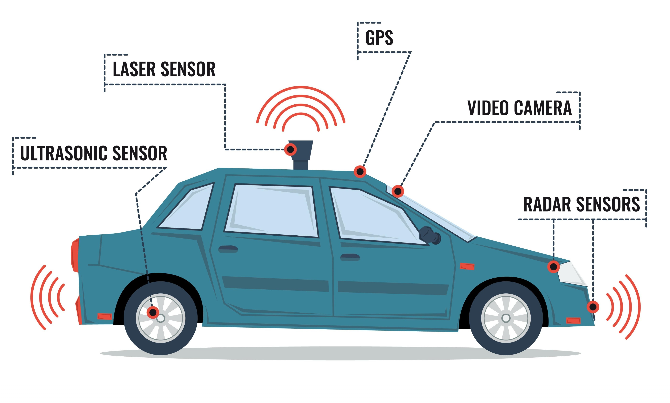
Mathematically, this translates to higher risks of failure. Let’s take a look:
Imagine the probability of failure for a single component is 0.01%—that is, 0.0001, or 1 in 10,000. You buy 10,000 lemons, and one turns out rotten. Very well.
Probability of failure: P(F) = 0,01%
Probability of non-failure: P(NF) = 1 − 0,01% = 1 − 0.0001 = 0.9999
Now imagine we have 100 components of this high quality. The probability that the entire system does not fail is the product (not the sum) of all the individual non-failure probabilities:
P(NF) = P1(NF) x P2(NF) x ….. x P99(NF) x P100(NF)
P(NF) = 0,9999 x 0,9999 x …. = (0,9999)100 ≈ 0.990049
P(F) = 1 − P(NF) = 1 − 0.990049 ≈ 0.009951
(The probability of system failure is now 0.9951%, or roughly 1%).
However, an autonomous system adds about 10,000 components to the vehicle—supposedly top-tier, military-grade, extremely expensive components—giving us the following equation:
P(NF) = 0,9999 x 0,9999 x …. = (0,9999)10.000 ≈ 0.36786
P(F) = 1 − P(NF) = 1 − 0.36786 ≈ 0.632139
(The probability of failure for the whole system is now 63.21%).
So, getting into an autonomous car and having everything work perfectly has a significantly lower probability than flipping a coin. And this only covers the physical elements of the system. We haven’t even talked about the software.
An autonomous driving system includes millions of lines of code that allow the vehicle to interpret sensor data, make decisions, plan routes, and control vehicle mechanics (acceleration, braking, steering).
Has the software on your PC or smartphone ever crashed on you?
By adding the word software to a system, we invite many ghosts: bugs (programming errors), malware (malicious viruses), cyberattacks (malicious humans), unexpected reboots (a nearby lightning strike causing a system hiccup), loss of connection (in a tunnel), outdated software (versions upon versions), and data corruption (incorrect, incomplete, or untimely data).
Above all, we are handing over the wheel (some autonomous vehicles don’t even have steering wheels) to a system that can make wrong decisions and is being developed by humans who have made wrong decisions in the past. Let’s see…
Would You Put Your Child in an Autonomous Vehicle? The Distrust in the Auto Industry
The question is not frivolous. To answer it, one must examine the dark history of an industry that has demonstrated time and again that greed often trumps responsibility. Its history is not an unbroken chain of flawless progress, but one of catastrophic failures, corporate negligence, and a constant struggle for public trust.
Consider the General Motors ignition switch scandal. It wasn’t a futuristic software bug, but the failure of a simple mechanical part that triggered a deadly domino effect. The switch, due to a design flaw, could unexpectedly shut off if the key ring carried extra weight or if the vehicle hit a bump. When the engine shut off, power steering and power brakes stopped working. Worst of all, the airbags were deactivated, leaving the driver and passengers helpless in a crash. What makes this case an ominous sign for the autonomous era is that GM—the very company now investing heavily in driverless technology—knew about the defect for over a decade. Internal documents revealed that engineers discussed the problem, but corporate management decided not to fix it due to costs. The result: 124 deaths and hundreds of injuries, which only came to light after a settlement with the U.S. Department of Justice uncovered the truth.
And, of course, we cannot forget the Takata airbag saga. In what is perhaps the largest automotive recall in history, over 100 million vehicles across 19 different manufacturers were affected. The defect: the airbag inflator could explode with excessive force, spraying metal shrapnel inside the cabin, causing dozens of deaths. The flaw wasn’t a simple manufacturing error, but a problem with the inflator’s chemical compound degrading over time. Once again, the industry knew. Takata and several automakers were accused of concealing the flaw for years, prioritizing production over safety.
These cases serve as a chilling reminder that even the most proven technology and the largest manufacturers can make poor decisions that cost human lives. Worse still, they show a corporate tendency to hide these mistakes for financial reasons.
Now, we are asked to put our faith not in a switch or an airbag, but in a complex web of high-end sensors, intricate software algorithms, and Artificial Intelligence itself. Developers argue that their systems are «safer,» built with redundancy, and won’t make human errors.
However, as recent software recalls from companies like Tesla and BMW demonstrate, technology is not infallible. And unlike a human driver, liability in an accident caused by an autonomous vehicle remains a legal grey area yet to be resolved.
The debate over autonomous driving is not just about accident statistics or economic viability. It is a debate about trust. If the automotive industry has proven capable of concealing fatal flaws in the era of mechanical and electronic vehicles, what guarantees do we have that they won’t hide a flaw in the software of an autonomous vehicle?
The question is not whether technology can, in theory, be safer than a human. The question is whether the industry developing it can be more honest and transparent than the industry that brought us the GM ignition switch. Until that question has a clear answer, the idea of placing our children in a vehicle that drives itself will remain, for many of us, a leap of faith we are simply not ready to take.
Technological Euphoria and Investor Pressure
Another argument raised is that the sheer «excitement» of technologists to roll out these autonomous solutions is one of their main dangers. It is so «entertaining» to imagine these wonderful, magic solutions that it leads them to ignore criticisms or rational arguments, defending their ideas with such fervor that they even insult opponents with derogatory labels.
This is strikingly similar to what happened with Zeppelin technology, which ultimately ended in the Hindenburg tragedy because technologists ignored the warnings of more rational voices who pointed out the absurdity of carrying dozens of people beneath a giant, flammable bomb of hydrogen gas. Will the same happen with autonomous vehicles? A single accident resulting in the death of a child could «kill» the entire industry.
The story of the Hindenburg is a classic example of confirmation bias. Zeppelin developers were so convinced that their technology was the future of air travel that they ignored warnings about using hydrogen. Hydrogen was far cheaper and easier to acquire than helium (the safe, inert gas). The excitement over the «magic» of flight, coupled with the business opportunity, led to a severe underestimation of the risks inherent in such a highly flammable gas. The result was a tragedy that marked the end of the passenger Zeppelin era.
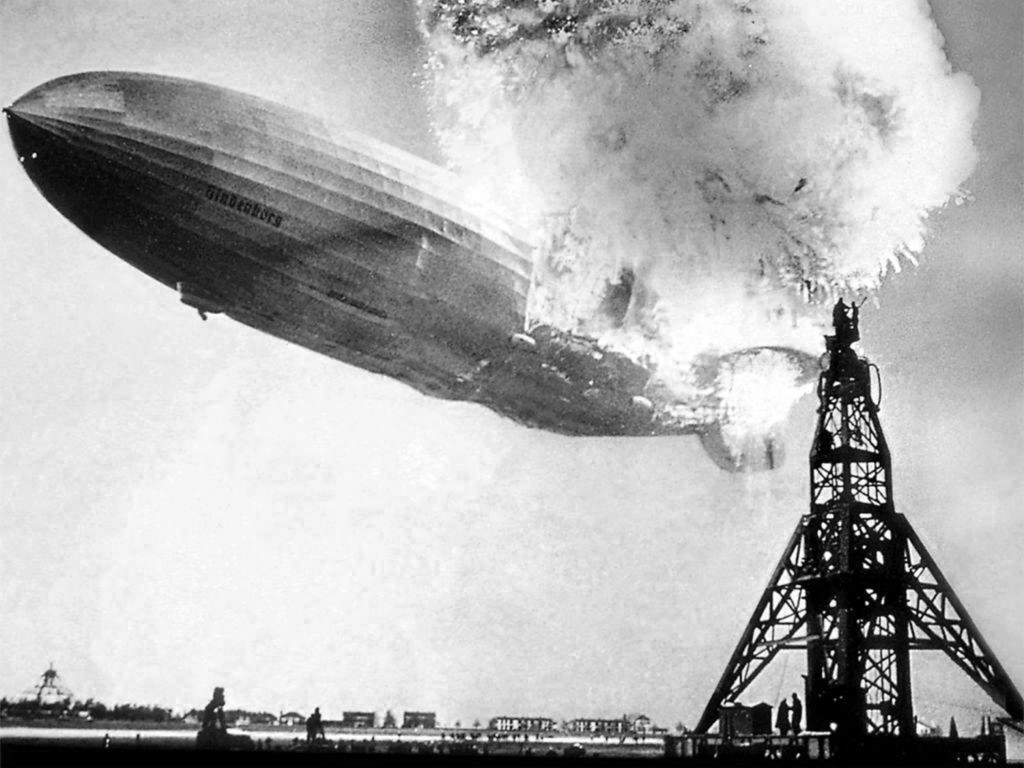
May 6th, 1937. A deadly spark.
I know I will be labeled a prophet of doom and an enemy of human progress, but there are many signs that make me doubt that autonomous vehicles are the right or intelligent way to solve the problems society faces as a result of choosing cars and trucks for its economic development.
Of course, safety features that complement driving and improve the chances of surviving an accident—or preventing one altogether—are completely welcome and necessary. But removing the driver is not the way.
There are better solutions: better driver training, shorter working hours, harsher consequences for reckless driving or driving under the influence, better communication and vehicle condition monitoring, discouraging individual travel in favor of public transit, decentralizing and reducing commute times, and reconfiguring our cities…
In Conclusion
Investing in autonomous technology to solve the problem of traffic accidents is an argument rooted in the premise that any life saved justifies the investment, no matter how monumental it may be.
The vision is dazzling: a future where vehicles glide down highways and streets without a single soul at the wheel. A utopia of safe roads, free of accidents and congestion. A world where the daily commute is no longer wasted in the frustration of traffic jams, but spent in the peace of reading or the productivity of answering emails. Silicon Valley technologists sell us this image with evangelical fervor, promising that Artificial Intelligence at the wheel is not just an upgrade, but our salvation.
But what if the solution they are steering us toward is, at its core, one of the most absurd ideas of our time? What if this immense investment in technology is nothing more than accelerated idiocy—an overly elegant response to a problem that, in essence, does not require such a costly and complex solution?
Furthermore, that investment is built on a technology attempting to fix a problem that, in the context of billions of successful journeys, could be considered non-existent on that scale, all while ignoring the social and economic benefits drivers bring to society. It is a debate between the cold logic of statistics and the social, economic, and human reality of the world we inhabit.
The solution to intercity and urban mobility lies not in self-driving vehicles, but in having fewer vehicles overall and encouraging people to use mass public transit. The economics of private vehicle ownership are unsustainable, and efforts in technology and AI should be directed toward building better mass transit systems (autonomous or not) rather than solving individual transport.
The premise of «eliminating the driver» promoted by the AI industry is merely one of the three most dangerous ideas of our era. It sits alongside «eliminating the artist» through AI-generated art, and «eliminating the customer service agent» through robots and chatbots. These three premises attempt to solve what does not need solving. They are attacking not a deficiency, but a fundamental part of the human experience: artistic expression, social labor, and the sense of responsibility.
The euphoria surrounding technological progress is understandable, but it cannot be blind. The promise of an accident-free world, however attractive, turns a blind eye to the reality of billions of journeys completed every day without incident. To eliminate the driver is, in a profound sense, to eliminate a piece of life itself. It means denying future generations the opportunity to learn a vital skill, to face a challenge, and to master it on their own.
The promise of vehicle autonomy is tempting, but it is a path fraught with complex dilemmas. Before embracing this technology as the remedy for all our troubles, we must remain critical and honest about its limitations. Perhaps the question isn’t whether autonomous vehicles can work, but whether we actually need them.
The first fallacy is the economic justification. We are told that AI will replace the driver—the most «expensive» piece of the system. Yet this perspective turns a blind eye to the true costs of technology. An autonomous vehicle doesn’t just come with an astronomical initial price tag, often tens of thousands of dollars more than a conventional car; it also demands a supporting infrastructure that, as we have seen, resembles a military operation more than a neighborhood garage. What happens when a tire blows out on the highway? The machine cannot change a tire. The fix isn’t technological; it’s logistical—a specialized support crew must be dispatched. And what about an elderly person who needs a hand getting into the car with their luggage? The machine has neither arms nor empathy. Once again, a human assistant is required.
A historical pattern serves as a warning against this technological euphoria. The story of the Zeppelins, which culminated in the Hindenburg disaster, stands as a stark reminder of how excitement over «magical» technology can cloud rational judgment. In their eagerness to fly passengers using a cheaper gas, engineers ignored the warnings of skeptics. The result was the end of an entire industry. Will an accident involving an autonomous vehicle—especially one taking a child’s life—become the Hindenburg of this new era?
As urban planners argue, the solution to our mobility challenges does not lie in a fleet of self-driving cars, but in having fewer vehicles on the road altogether. This is not a question of technology, but of social policy. AI investments should be directed toward making mass transit systems more efficient and accessible, reducing both congestion and environmental impact, rather than perpetuating the unsustainable model of the personal vehicle.
And finally, who will pay for all of this? The paradox of automation looms large. If AI displaces millions of taxi drivers, delivery workers, and truck drivers, who will possess the purchasing power to afford these sophisticated services? The future being painted for us is a landscape of pristine, yet empty highways—a system refined to such perfection that there are no longer any customers left to use it.
AI is not idiocy. It is a powerful and wonderful tool. But in the case of autonomous vehicles, the deployment of this intelligence appears to be one of the most accelerated manifestations of human madness: spending a fortune to solve a problem that, day in and day out, does not exist for most people—and in the process, creating a host of new problems that could prove far harder to solve.
Guillermo Ramírez – August 2025
And a Final Warning
In every critical activity of our digital life, we are constantly asked if we are robots:

There is a genuine fear that machines will replace us to carry out actions—for better or worse—in our digital environment.
For now, we are protected because, in AI applications, machine intervention occurs through a CHAT—a conversation where its responses can be accepted or rejected by the human user, who ultimately decides what to do with them.
Today, the machine limits itself to making suggestions; we have not yet granted it permission to act on our behalf. That will be the next level, where autonomous agents will be able to make decisions, and those decisions will carry real-world consequences.
However, in the case of autonomous vehicles, we are already granting the machine permission and authority to intervene in the physical environment of our cities and highways, operating a multi-ton lethal weapon.
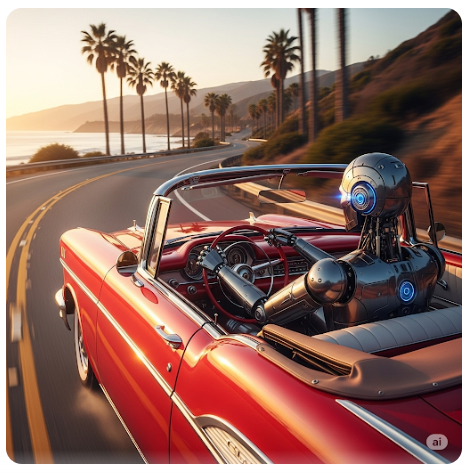
How are we to make sense of such a contradiction?
ANNEX 1
(Contribution by Gemini)
The automotive industry’s track record is filled with instances where the introduction of new technologies—particularly electronic systems—has resulted in design or manufacturing flaws that required massive recalls. This demonstrates that even in a controlled development environment, errors are a real and dangerous possibility.
Here are some of the most notable and relevant cases, both recent and historical, that illustrate this point:
1. The Toyota Accelerator Pedal Recall (2009–2010)
This is perhaps one of the most famous cases of component failures that sparked widespread safety concerns. Toyota had to recall more than 8 million vehicles worldwide.
- The Failure: The company received complaints that certain vehicles were experiencing «unintended acceleration,» which in some cases led to fatal crashes. The initial cause was attributed to accelerator pedals getting stuck or floor mats interfering with the pedal mechanism.
- Electronic/Software Issues: While a subsequent investigation by the NHTSA (U.S. National Highway Traffic Safety Administration) and NASA found no large-scale electronic defect, the controversy highlighted how the complexity of electronic systems in modern vehicles can be difficult to diagnose and can lead to severe safety issues.
2. The Takata Airbag Scandal (2013–Present)
This massive safety crisis impacted almost every major automaker and resulted in dozens of deaths worldwide.
- The Failure: Takata’s airbag inflators could explode with excessive force, firing metal shrapnel directly at vehicle occupants. The cause was a chemical compound used in the inflator that degraded over time when exposed to heat and humidity.
- Scope: This stands as the largest recall in automotive history, affecting over 100 million vehicles across at least 19 different manufacturers.
3. Recent Software-Related Recalls
In the modern era, as electronic and software systems proliferate in vehicles, software-driven recalls are becoming increasingly common.
- Ford (2024): Ford recalled over 330,000 vehicles due to a safety defect.
- BMW (2022): The automaker recalled more than 70,000 electric vehicles due to a software error that could cause the high-voltage system to unexpectedly shut down, leading to a sudden loss of drive power.
- Tesla (2023): Tesla recalled over 362,000 vehicles equipped with its Full Self-Driving (FSD) Beta software. The NHTSA stated that the software could allow vehicles to act unsafely at intersections—such as speeding through them or failing to come to a complete stop at stop signs. Although no deaths were reported in this specific recall, the flaw posed a significant risk of severe accidents.
4. The GM Ignition Switch Defect
One of the most notorious and tragic cases in recent automotive history led to a massive recall of millions of vehicles and claimed numerous lives.
- The Failure: A design flaw in the ignition switch meant that if a heavy key ring swung or the vehicle hit a bump in the road, the key could turn, causing the engine to suddenly shut off while driving.
- Catastrophic Consequences: When the engine died while moving, a fatal chain reaction occurred. Power steering and power brakes ceased to function, leaving the driver with almost no control. Worse yet, shutting off the engine also deactivated the airbags, leaving occupants defenseless during a collision.
- The Cover-Up: What made this case so egregious was that GM knew about the defect for over a decade before issuing a recall. Internal documents revealed that company engineers discussed the issue, but management opted not to take action—largely due to the costs associated with redesigning the part.
- The Aftermath and Legal Settlement:
- Massive Recalls: The scandal broke in 2014, forcing GM into one of the largest recalls in its history, affecting over 30 million vehicles globally.
- Confirmed Deaths: While GM initially acknowledged a low fatality count, a victim compensation fund set up by the company ultimately recognized 124 deaths and hundreds of injuries tied to the defect.
- Legal and Financial Toll: GM faced intense public backlash, lawsuits, and hefty fines. The automaker paid $900 million in a settlement with the U.S. Department of Justice and hundreds of millions more in compensation to victims and their families.
5. Volkswagen’s «Dieselgate»
The «Dieselgate» scandal stands as one of the largest corporate frauds in automotive history and a stark example of how corporate actions break public trust. It came to light in 2015 when it was discovered that Volkswagen Group had rigged emissions test results for its diesel vehicles.
- Details of the Scandal: The fraud involved installing illegal software—known as a «defeat device»—into the EA189 diesel engines of roughly 11 million vehicles worldwide. The software could detect when the car was undergoing laboratory emissions testing. During tests, the software activated full emissions controls to meet nitrogen oxide ($\text{NO}_x$) standards. However, once on the road, the software switched off these controls, allowing the car to emit up to 40 times the legal limit of $\text{NO}_x$. High $\text{NO}_x$ emissions improved engine performance and fuel efficiency, but at the cost of severe air pollution. The deception was uncovered by a small research team at West Virginia University in the United States.
- Consequences:
- Fines and Penalties: Volkswagen paid tens of billions of dollars in fines, settlements, and buybacks. In the U.S. alone, the company agreed to pay over $25 billion in vehicle buybacks, repairs, and environmental penalties. Criminal charges were also brought against high-ranking executives, several of whom received prison sentences.
- Reputational Loss: The scandal severely damaged consumer trust in Volkswagen, a brand long associated with reliability and engineering quality.
- Environmental Impact: The excess nitrogen oxide emissions contributed heavily to air pollution and have been linked to respiratory illnesses and premature deaths.
- Industry-Wide Shift: Dieselgate accelerated the global transition toward electric vehicles as regulators and consumers grew skeptical of clean-diesel claims. It also forced regulatory agencies worldwide to overhaul emissions testing protocols to include real-world driving conditions.
ANNEX 2
(Kind contribution by Gemini)
As of today, none of the leading autonomous vehicle companies have achieved profitability. They are all in a phase of massive investment and heavy capital consumption (cash burn) as they develop the technology and attempt to scale their operations. The general consensus is that it will still be several years before this business model proves its financial viability. Below is a summary of the main players and their current status:
1. Waymo (Alphabet/Google)
- Description: Undisputedly one of the sector’s leaders, Waymo has been operating a robotaxi service in cities such as Phoenix, San Francisco, and Los Angeles. Its technology is widely considered among the most advanced in the world.
- Financial Performance: Waymo does not disclose its financial results independently, as it operates as part of Alphabet (Google’s parent company). However, it is well known that it has operated with multi-billion-dollar losses. Alphabet has poured billions of dollars into the venture, and Waymo has raised external capital through massive funding rounds. In 2024, Alphabet committed to investing up to an additional $5 billion in Waymo, underscoring the sheer scale of investment required.
- Outlook: Waymo is expected to be among the first companies to reach profitability, though the exact timeline remains uncertain. While its valuation has grown significantly, profitability remains a major question mark for analysts.
2. Cruise (General Motors)
- Description: Owned by General Motors, Cruise has also been operating a robotaxi service, primarily in San Francisco. The company made significant technical strides and received massive backing from GM and other partners.
- Financial Performance: Much like Waymo, Cruise has posted substantial losses. In recent financial reports, General Motors reported quarterly losses running into hundreds of millions of dollars from Cruise’s operations. The company has also faced regulatory and safety hurdles that disrupted operations and drove up costs.
- Outlook: Following a severe safety incident in 2023, Cruise grounded its fleet and has been working to rebuild public trust and restructure its business. This setback has significantly delayed its path toward profitability.
3. Motional (Hyundai and Aptiv)
- Description: Motional is a joint venture between automaker Hyundai and automotive technology supplier Aptiv. Its core focus is developing autonomous tech to license to other manufacturers rather than operating a consumer fleet directly.
- Financial Performance: Motional does not publish its financial results, but it operates at a significant loss that continues to be bankrolled by its parent companies.
- Outlook: Its business model differs from its competitors because it aims to sell its technology stack to automakers rather than manage fleet operations. This business-to-business model could allow it to reach profitability faster if it secures major manufacturing contracts.
4. Zoox (Amazon)
- Description: Zoox, a subsidiary of Amazon, is focused on building a purpose-built, fully autonomous vehicle from scratch—devoid of a steering wheel or pedals—specifically designed for robotaxi services.
- Financial Performance: Amazon does not break out Zoox’s financial metrics, but investments are estimated to be in the billions.
- Outlook: Its business model aligns closely with Amazon’s broader strategy to transform logistics and last-mile delivery. Pure profitability in passenger transit may be a long-term goal; the true value for Amazon likely lies in the efficiency autonomous tech brings to its package delivery ecosystem rather than ride-hailing services alone.
For Investors
For investors, the landscape is clear: the autonomous vehicle industry is a marathon, not a sprint. The technology is still in a developmental and maturation phase, and the initial costs of research, development, and infrastructure building are immense. Not a single company in this space is posting positive financial returns today.
The return on investment will be measured in years, if not decades. The companies that survive and flourish will be those backed by deep pockets (such as Alphabet and Amazon) capable of absorbing the exorbitant long-term investment costs.
ANNEX 3
(Yes, also contributed by Gemini)
10 Scenarios Where a Human Driver Could Prevent an Accident
- Physical Damage to a Sensor: A flock of birds or a flying object strikes and destroys a LiDAR sensor or a front-facing camera. The autonomous system might lack sufficient redundancy to compensate for the sudden loss of data. A human driver, upon losing clear vision of the road, would react instantly by slowing down and pulling over safely.
- Electronic System Failure Due to Electromagnetic Interference: A nearby lightning strike or severe electromagnetic interference (EMI) causes a momentary glitch or «spasm» in the vehicle’s control unit. A human driver—though startled by the failure—would retain physical control of the steering wheel and brakes, deciding to pull off the road or proceed with caution, whereas the autonomous system might exhibit erratic or unpredictable behavior.
- Software Bugs: A programming error (bug) causes the vehicle to misinterpret a traffic signal—for instance, confusing a red light for a green one. A human driver, seeing the actual light, would immediately override the system’s mistake and prevent a collision.
- Malware or Cyberattack: A hacker manages to breach the vehicle’s system and take control of the brakes or steering. A human driver, sensing that the vehicle is not responding to inputs, could take manual control, initiate an emergency shutdown, or use the mechanical handbrake to prevent the attacker from causing a crash.
- Loss of GPS Signal: The vehicle loses its GPS signal inside a long tunnel or an area with heavy signal interference. The autonomous system could lose its orientation and struggle to navigate, whereas a human driver, relying on contextual awareness and memory of the route, would continue driving without issue.
- An Unexpected Object on the Road: A mattress, box, or piece of furniture falls off a moving truck. While the autonomous vehicle’s sensors might detect it, the AI might make an overly conservative choice by slamming on the brakes, triggering a rear-end collision. A human driver, leveraging real-world experience, could make a more nuanced choice—such as swerving safely or braking progressively.
- Extreme Weather Conditions: An unexpected snowstorm covers road markings and coats the vehicle’s sensors in ice. The autonomous system could lose its visual references required to stay in its lane. A human driver, sensing the loss of traction and evaluating the conditions, would adapt their driving style to maintain control and safety.
- Erratic Behavior by a Pedestrian or Animal: A pedestrian unexpectedly dashes onto the road, or an animal darts across an area with poor visibility. A human driver could rely on instinct and anticipation to take evasive action that the AI wasn’t programmed to predict—such as sounding the horn to alert the pedestrian.
- Flaws in High-Definition Digital Maps: The vehicle’s HD digital map is outdated or contains an error indicating that a one-way street allows two-way traffic. The autonomous vehicle might attempt to turn against oncoming traffic. A human driver, spotting the physical «Do Not Enter» sign, would ignore the map’s instructions and follow the correct path.
- Fleet Communication Network Blackout: During a major emergency event (such as an earthquake), the central fleet communication network goes down. The autonomous vehicle could become isolated and disoriented. A human driver, however, could continue operating the vehicle based on personal judgment and visual cues from the surrounding environment.